The good news? Seven habits cover most of the problem. Check the outdoor air before you ventilate, test for radon, and upgrade your HVAC filter. Then manage humidity, add carbon monoxide detectors, ventilate smart through winter, and cut the pollution you create indoors. Here's how each one works in a Wisconsin home.
TL;DR Quick Answers
Air Quality Wisconsin
Air quality in Wisconsin shifts with the seasons. Summer brings ozone along the Lake Michigan shoreline and Canadian wildfire smoke, and winter seals homes shut, trapping radon, carbon monoxide, and moisture indoors. Check the live AQI before opening windows, because outdoor pollution reaches the air your family breathes inside within hours.
Check the AQI daily: Readings from 0 to 50 are good. Above 100, close the windows and let your HVAC system filter the air you already have.
Summer threats: Ozone builds on hot, still days in Milwaukee and other lakeshore counties, and wildfire smoke can push readings into unhealthy ranges for days at a time.
Winter threats: About 1 in 10 Wisconsin homes has high radon levels, and a test is the only way to know yours.
Filtration: MERV 11 handles everyday dust and pollen. Step up to MERV 13 during smoke events if your system can handle it.
Carbon monoxide: Put a detector on every floor and change the batteries twice a year.
Top Takeaways
Test for radon. About 1 in 10 Wisconsin homes has high levels, and testing is the only way to know where yours stands.
Filter smarter. MERV 11 handles daily dust and pollen, while MERV 13 steps in for smoke and allergies.
Balance humidity. Somewhere between 30 and 50 percent keeps mold and dust mites in check.
Guard against carbon monoxide. Put a detector on every floor and schedule a yearly inspection for fuel-burning appliances.
Watch the outdoor air. Shut the windows once the AQI tops 100.
Why Indoor Air Quality in Wisconsin Needs Year-Round Attention
Air quality in Wisconsin changes with the calendar, and every season hands your home a different problem.
Long heating seasons: A closed-up house holds onto everything you cook, clean, and burn, plus whatever the pets shed.
Radon from the ground: Wisconsin health officials estimate that about 1 in 10 homes in the state has high radon levels, and elevated readings turn up in every corner of the state.
Summer ozone and wildfire smoke: Lakeshore counties along Lake Michigan still fight summer ozone. Canadian wildfire smoke has also pushed readings into unhealthy ranges during recent summers.
Humidity swings: Winter air dries out your sinuses. Damp summer basements give mold an easy place to start.
7 Tips to Improve Indoor Air Quality in Your Wisconsin Home
1. Check Outdoor Air Quality Before You Open the Windows
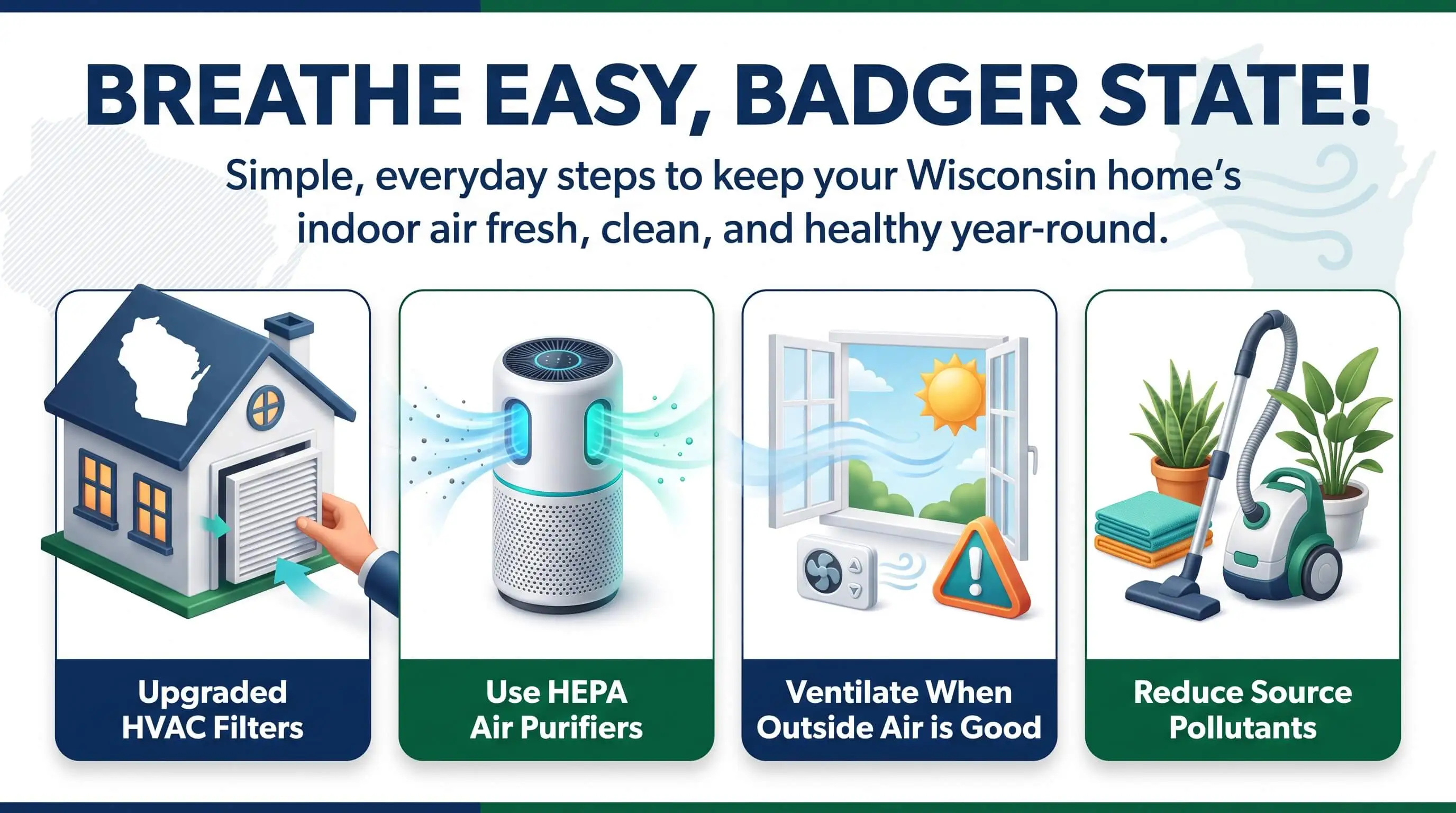
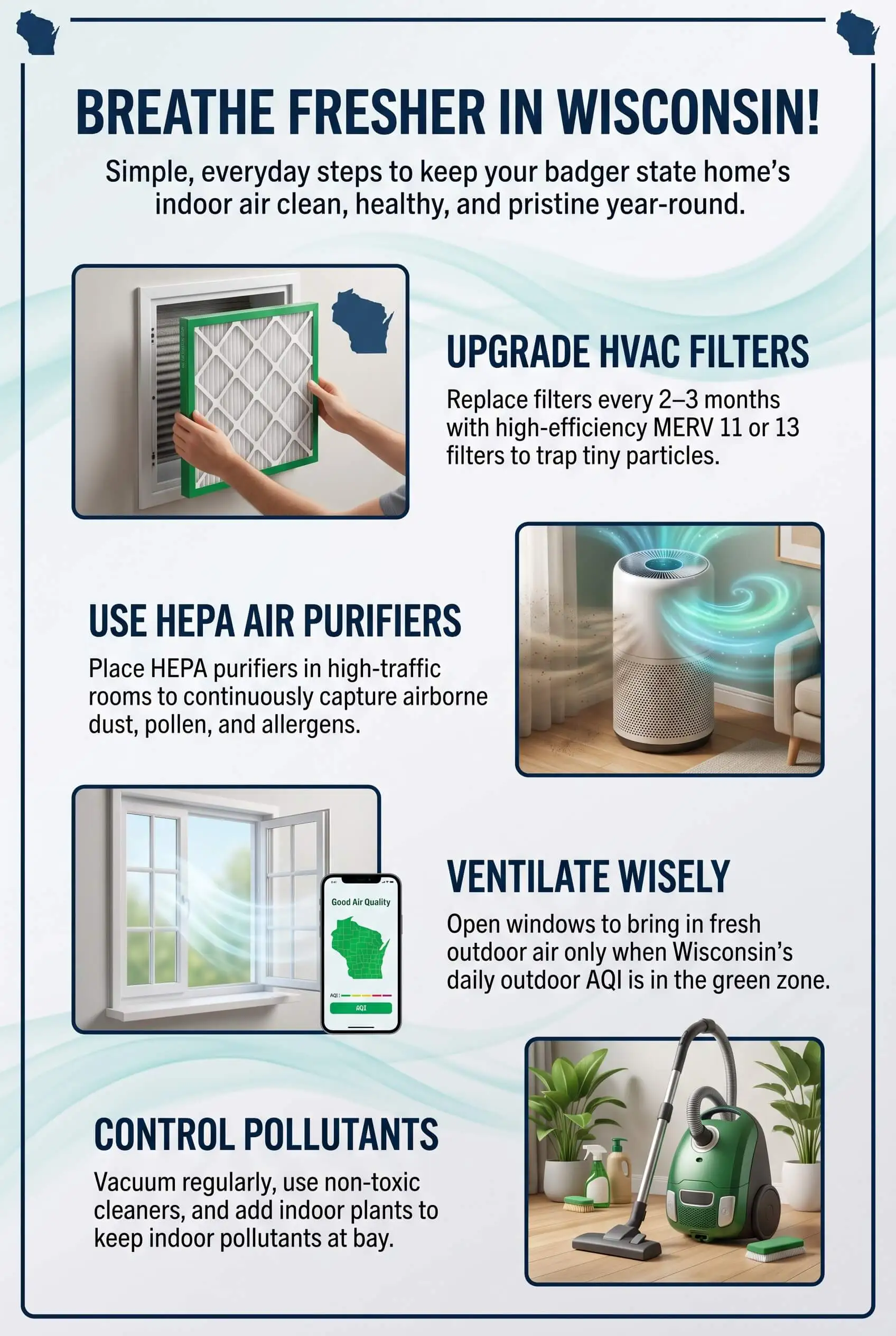
A window only helps when the air outside is cleaner than the air inside. Smoke and ozone work their way in through gaps and fresh-air intakes within hours, so make a quick AQI check part of your routine before you air out the house. Once the reading passes 100, keep the windows shut and let your HVAC system recirculate and filter the air you already have.
2. Test Your Home for Radon
Radon seeps up from the soil through foundation cracks and gaps. A test is the only way to learn your level, and plenty of county health departments and hardware stores sell inexpensive short-term kits. If your result lands at or above the EPA action level of 4 pCi/L, a certified contractor can install a mitigation system that vents the gas outdoors. And don't go by your neighbor's numbers. Two houses on the same street can test very differently.
3. Upgrade and Replace Your HVAC Air Filter
Your furnace filter is the main thing standing between your family and the dust, pollen, pet dander, and smoke particles moving through the ducts. MERV 11 covers everyday needs in most Wisconsin homes. When wildfire smoke rolls in, or someone in the house has allergies, MERV 13 catches finer particles, as long as your system can handle it. Check the filter monthly during peak heating and cooling months and swap it once it turns gray or airflow drops. Pairing each change with routine AC maintenance keeps the whole system running clean.
Pro Tip: I use the first cold snap of fall as my cue to change the filter, because the furnace is about to run for months with barely a break.
4. Keep Indoor Humidity Between 30 and 50 Percent
An inexpensive hygrometer shows you exactly where you stand. A humidifier takes the edge off dry winter air, though too much moisture fogs the windows and feeds mold on cold exterior walls. Summer flips the problem. Run a dehumidifier in the basement and fix leaks fast. Holding humidity in that range keeps mold and dust mites in check while your family stays comfortable.
5. Install Carbon Monoxide Detectors on Every Floor
Furnaces, water heaters, gas stoves, fireplaces, and attached garages can all bring carbon monoxide into the house. Put a detector on every level, change the batteries twice a year, and book a furnace inspection before the heating season starts. Never run a generator, grill, or car engine inside a garage or near an open window.
6. Ventilate Smart During the Heating Season
Sealing up for winter shouldn't mean shutting out fresh air entirely. Run the bathroom fan during and after every shower, turn on the range hood whenever you cook, and crack a window on mild days when the outdoor air checks out. Tight, newer homes do well with a heat recovery ventilator or energy recovery ventilator, usually called an HRV or ERV, which pulls in fresh air without dumping the heat you paid for.
7. Cut Indoor Pollution Sources
The easiest pollutant to filter is the one you never create. Keep smoking outdoors and burn only dry, seasoned wood. Paints and solvents belong in a detached shed or garage, and low-VOC cleaners get the job done without the fumes. On bad outdoor air days, skip the candles and incense too. Consider dryer vent cleaning services to help prevent lint buildup and keep your dryer vent clear.
"Every fall I watch the same thing happen in Wisconsin homes. The furnace starts running nonstop, the filter loads up faster than anyone expects, and the radon test kit sits unopened in a kitchen drawer. Heating season is when indoor air matters most, because anything that gets inside stays there until spring."
7 Essential Resources
Wisconsin Live Air Quality Map: Real-time AQI readings from across the state, with filter advice for high-AQI days.
Wisconsin DNR Air Quality Trends: Yearly state reports that track ozone and fine particle levels county by county.
EPA Introduction to Indoor Air Quality: The most common indoor pollutants, where they come from, and how to cut them down.
CDC Air Quality: Health guidance for the people poor air hits hardest, including kids and anyone with asthma.
American Lung Association State of the Air: County-by-county grades for ozone and particle pollution.
HUD Healthy Homes for Healthy Families: Practical principles for keeping a home dry, well ventilated, and free of contaminants.
National Weather Service: Why Air Quality Is Important: How ozone and particle forecasts work, and how to limit your exposure.
3 Supporting Statistics
Carbon monoxide sends around 500 people in Wisconsin to the emergency room every year, and about 1 in 10 homes in the state has high radon levels. Wisconsin Department of Health Services: Air Quality Issues
The American Lung Association's State of the Air report gave failing grades to 16 of the 26 Wisconsin counties with air quality data, up from seven the year before. Wisconsin Public Radio
Radon ranks as the second leading cause of lung cancer overall and the leading cause among nonsmokers. Wisconsin has more than 100 certified radon mitigation contractors ready to fix high readings. Wisconsin Cancer Collaborative
Wisconsin faces serious air quality concerns, with hundreds of carbon monoxide-related emergency visits, elevated radon levels in many homes, and failing outdoor air quality grades in 16 counties. Using top air filters can help reduce airborne particles indoors, while carbon monoxide detectors and radon testing address hazards that air filters cannot remove.
Final Thoughts and Opinion
My honest take: most Wisconsin families don't need pricey gadgets to breathe cleaner air at home. What they need is a seasonal rhythm. Fall is for the radon test and the furnace inspection. Through winter, keep an eye on the filter and the humidity, and once summer smoke season arrives, check the AQI before you open a window. It's also a good time to check that your AC compressor is working properly so your cooling system can keep running when the windows need to stay closed. Each step takes a few minutes. Together, they cover the invisible threats that matter most in this state, and that's how you become the hero of your household's air, one habit at a time.
Frequently Asked Questions
Is Indoor Air Quality Worse in Winter in Wisconsin?
Often, yes. With the windows shut and the furnace running for hours, moisture, cooking fumes, combustion byproducts, and radon all build up indoors. Steady ventilation, a clean filter, and working carbon monoxide detectors keep winter air from going stale or turning unsafe.
How Often Should I Change My Furnace Filter in a Wisconsin Winter?
Check it every month while the furnace works hard. Many 1-inch filters need replacing every one to three months, and thicker 4- or 5-inch filters usually last longer. Replace any filter that looks gray or chokes airflow.
Does Canadian Wildfire Smoke Affect Indoor Air in Wisconsin Homes?
Yes. Fine smoke particles slip in through gaps, doors, and fresh-air intakes. When it's smoky out, close the windows, switch the thermostat fan to "On," and run the highest MERV-rated filter your system can handle.
What MERV Rating Is Best for a Wisconsin Home?
For most homes, MERV 11 takes care of everyday dust, pollen, and pet dander. MERV 13 catches finer particles like smoke, so it earns its place during wildfire season or in a house with allergy sufferers, as long as your system handles the added resistance.
Where Can I Get a Radon Test Kit in Wisconsin?
Plenty of county and city health departments sell low-cost short-term and long-term kits, and hardware stores stock them too. Wisconsin's regional radon information centers can walk you through your results and point you to certified mitigation contractors.
Breathe Easier in Your Wisconsin Home All Year
Pick one tip from this list and put it to work this week, whether that means ordering a radon test kit or swapping out your furnace filter. Every small step improves indoor air quality in your Wisconsin home and brings your family closer to cleaner, healthier air in every season.